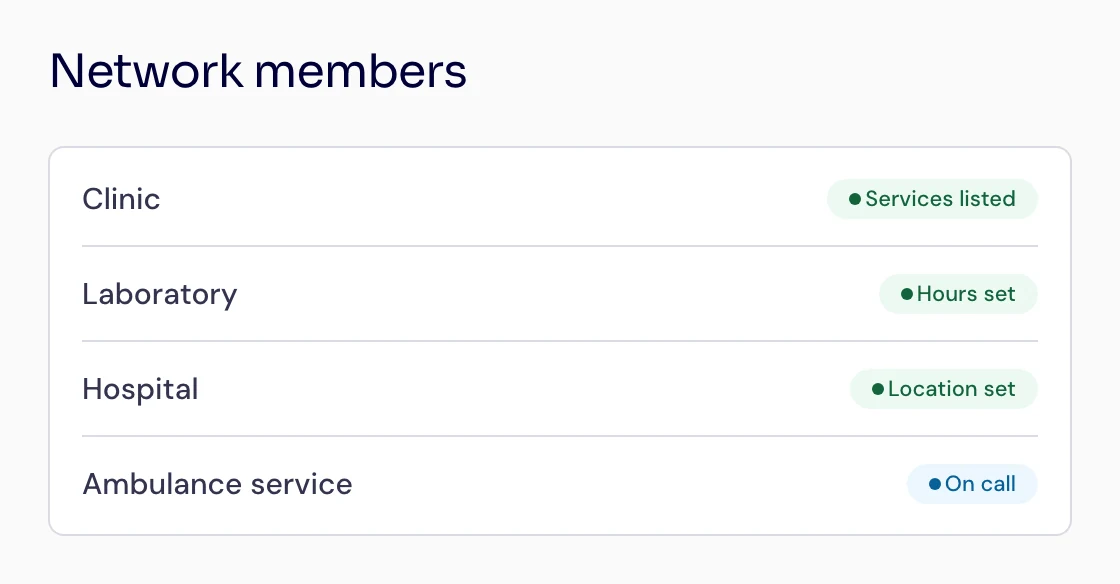
Map the network.
Members, the services each offers, their opening hours and locations.
ByteNetwork links healthcare providers and insurers, and routes patients to providers who can take them. Facilities hand off referrals and emergencies through it, and insurers and health schemes run their provider networks on it.
Talk to us about ByteNetwork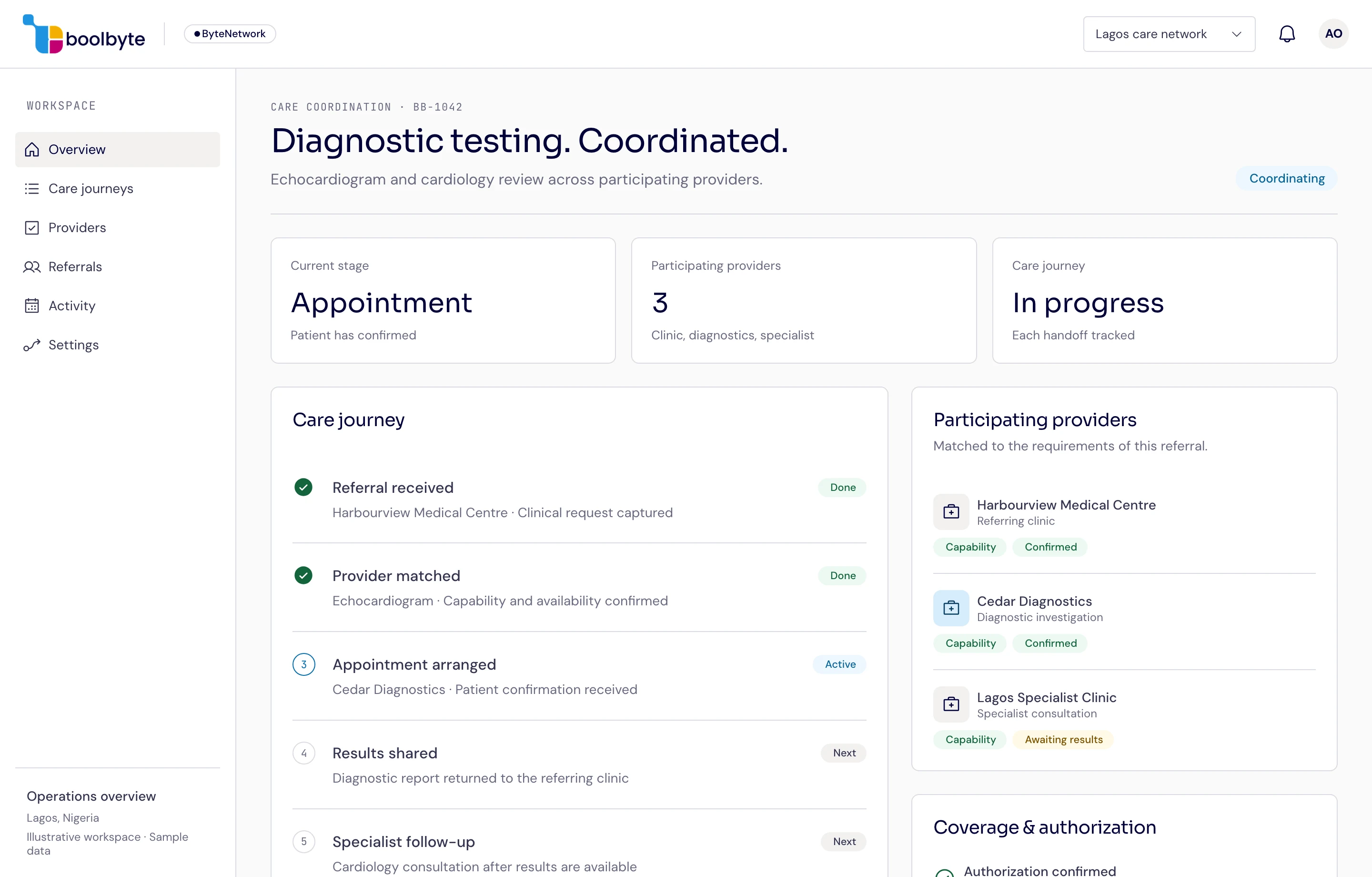
Every member lists its services, opening hours and where it is.
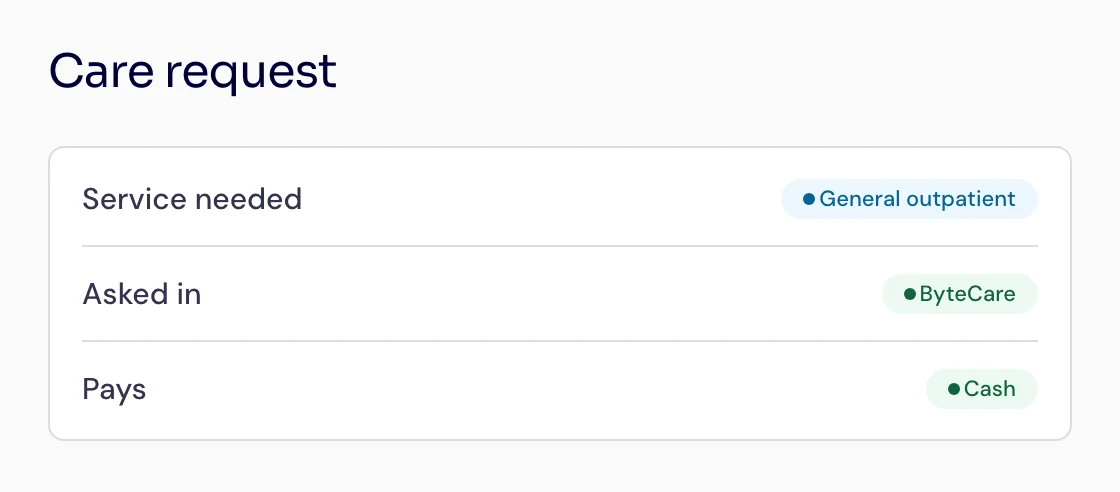
A patient's request goes to the nearest members that are open and offer the service. If none takes it on, the next nearest are asked.
A referral carries the patient's details to the next provider, whether or not that provider uses Boolbyte.
Emergencies reach the nearest team that can act, ambulances included.
Your network works as one.
Members, the services each offers, their opening hours and locations.
From a patient in ByteCare, or from a member facility.
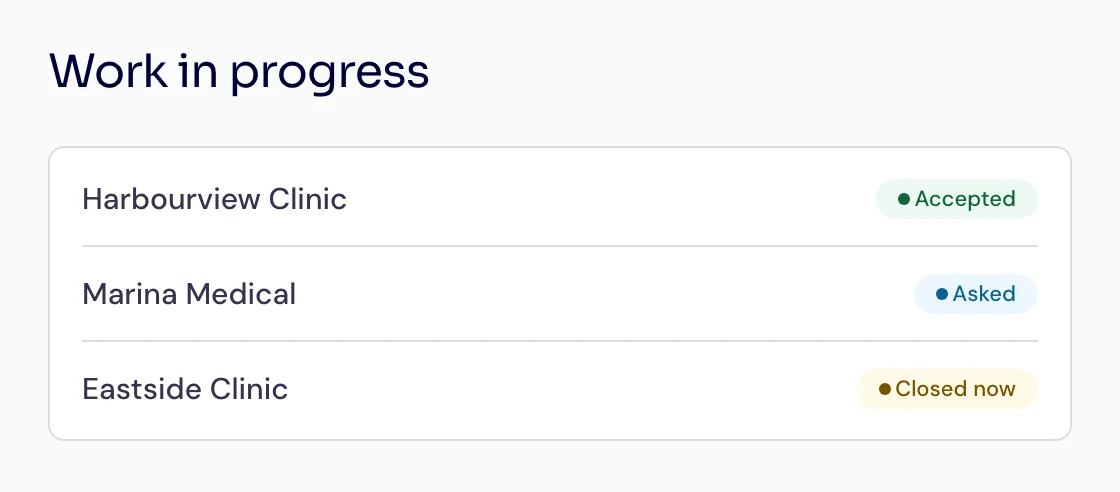
Open now, offering the service, closest first. If no one answers, the next nearest are asked.
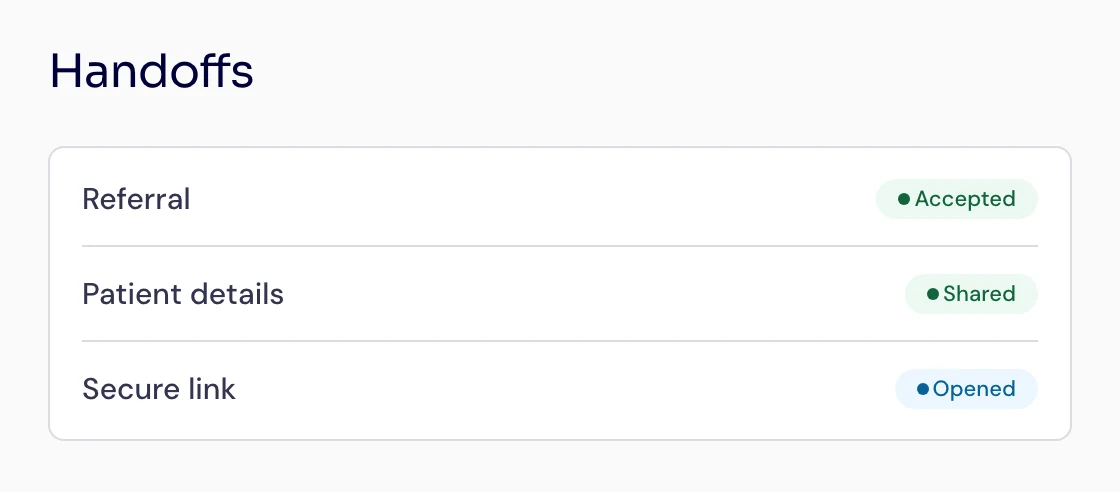
Referrals carry the patient's details. A facility not on Boolbyte opens them through an encrypted link.
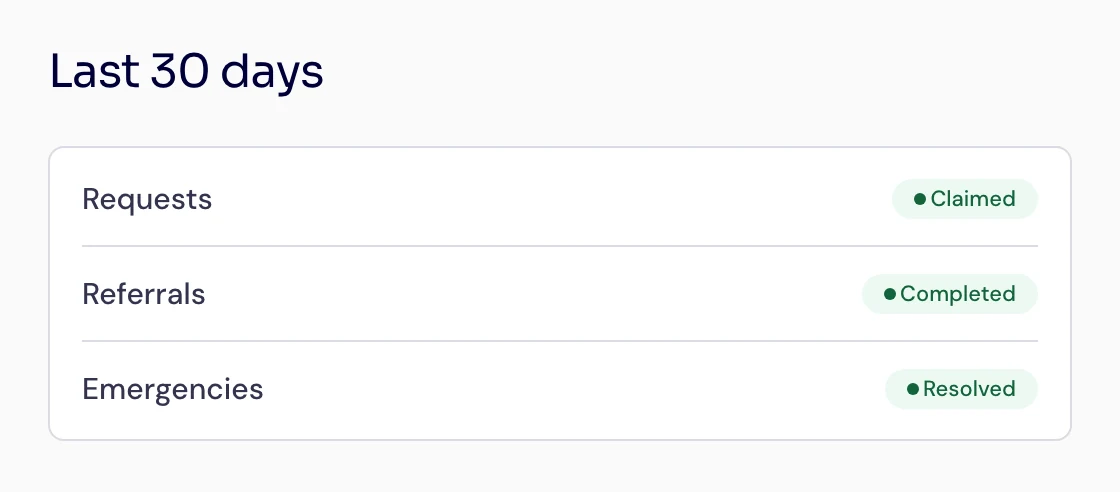
Requests taken, referrals accepted and completed, emergencies resolved.
See how ByteNetwork would connect your providers.
Talk to usFacilities take part with the systems they already run. ByteOps is optional.
Takes requests, referrals and emergencies in its own workspace.
Receives referrals as encrypted SMART Health Links and answers online.
Boolbyte's desk phones them with the passcode to open the referral.
Pair it with ByteOps for the admin inside each facility, and ByteCare, where patients ask for care.
Members, invitations, join requests, notices, limits, reports and activity in one place.
The nearest members are alerted first, widening until one acknowledges.
If the nearest members don't answer, a request goes to the next nearest until one accepts.
Facilities not on ByteOps receive referrals as encrypted SMART Health Links.
Run your provider network, and see requests and referrals through to care.
Connect public and private facilities across primary, secondary and tertiary care.
Share services and hand off patients across your facilities.
Connect employees with participating providers.
Receive patients routed to you, and refer to other members.
It links healthcare providers and insurers into one network. It routes patients to members who can take them, carries referrals and emergencies between facilities, and gives the network manager one console to run it.
No. Referrals are one thing that moves across it. It also routes patients who ask for care, alerts the nearest team in an emergency, and lets insurers and health schemes run their own provider networks.
A directory says who belongs to a network. ByteNetwork also knows what each member offers and when it is open, sends each request to the members best placed to take it, and follows referrals and emergencies until they are answered.
Yes. Providers take part with the systems they already run: in ByteOps, through an encrypted link they open in a browser, or with help from Boolbyte's desk by phone.
No. Facilities join a ByteNetwork deployment with the systems they already run. ByteOps is optional.
When someone raises an emergency in ByteCare, the nearest members are alerted first, and the alert widens until one acknowledges it. Ambulances are members of the network too, and responders are given the person's location so they can reach them.
The console shows every member, invitation, request and alert in one place, with notices, limits, reports and activity. Managers approve alerts, bring in organizations that are not on ByteOps, and see which referrals end in completed care.
Tell us how your network is set up. We'll show you how ByteNetwork connects it.
Talk to us about ByteNetwork